Sustainability in Coffee: A Word That Deserves More Honesty
“Sustainability” has become one of the most visible—and misunderstood—words in specialty coffee.
It appears on bags, websites, and café menus, often standing in for “good” without much explanation of what that actually means. For some brands, it’s a convenient label. For the people growing coffee, it’s a daily reality shaped by climate, market pressures, and limited resources.
Sustainable coffee isn’t perfect. It’s intentional.
True sustainability in coffee isn’t defined by flawless systems or sweeping claims. It’s shaped by thousands of decisions made at origin and along the supply chain—trade‑offs, constraints, and long-term commitments that rarely fit neatly into a single label or certification.
At The Roaring Bean, we believe the most responsible thing a coffee brand can do is speak honestly: about where coffee comes from, how it’s produced, and what sustainability actually looks like in practice. Not as a destination, but as a direction.
“Sustainability” has become one of the most visible—and misunderstood—words in specialty coffee.
It appears on bags, websites, and café menus, often standing in for “good” without much explanation of what that actually means. For some brands, it’s a convenient label. For the people growing coffee, it’s a daily reality shaped by climate, market pressures, and limited resources.
Sustainable coffee isn’t perfect. It’s intentional.
True sustainability in coffee isn’t defined by flawless systems or sweeping claims. It’s shaped by thousands of decisions made at origin and along the supply chain—trade‑offs, constraints, and long-term commitments that rarely fit neatly into a single label or certification.
At The Roaring Bean, we believe the most responsible thing a coffee brand can do is speak honestly: about where coffee comes from, how it’s produced, and what sustainability actually looks like in practice. Not as a destination, but as a direction.
If you’ve spent time researching ethical coffee sourcing, you’ve probably encountered two extremes.
On one side are large-scale brands promising total sustainability across sprawling global operations. They present perfectly tidy narratives where every bean seems to flow through a flawless, traceable, impact‑positive system.
On the other side are overly romantic stories that skip past the economic and environmental realities producers face: labor shortages, volatile prices, climate stress, and the simple fact that farms must remain financially viable to survive.
The truth lives somewhere in between.
Coffee is grown in complex environments—not just ecologically, but economically and culturally. Farmers and producers are constantly navigating uncertainty: shifting rainfall patterns, plant disease, increased input costs, new regulations, and buyers whose expectations may not match production realities.
In that context, sustainability is not a clean, linear path. Even the most well‑intentioned farms must weigh tough trade‑offs, such as:
There is no version of sustainable coffee that exists without compromise. Pretending otherwise doesn’t make coffee more ethical—it just makes the story less honest.
Acknowledging those trade‑offs is not a sign of failure. It’s a sign of integrity.
Today’s coffee drinkers are more informed and curious than ever. They’re not just asking what tastes good; they’re asking why it tastes that way, and who was involved along the way.
People seeking ethical coffee don’t just want big promises. They want clarity. They want context. They want to understand:
This is where transparency becomes the defining value of modern coffee luxury.
Luxury in coffee is no longer just about rarity or exclusivity. It’s about trust.
A truly transparent coffee brand doesn’t need to shout about being “the most ethical” or “100% sustainable.” Instead, it:
At The Roaring Bean, we don’t treat sustainability as a marketing milestone we check off on a list. We see it as an ongoing responsibility—one that requires humility, consistency, and clear communication with both producers and customers.
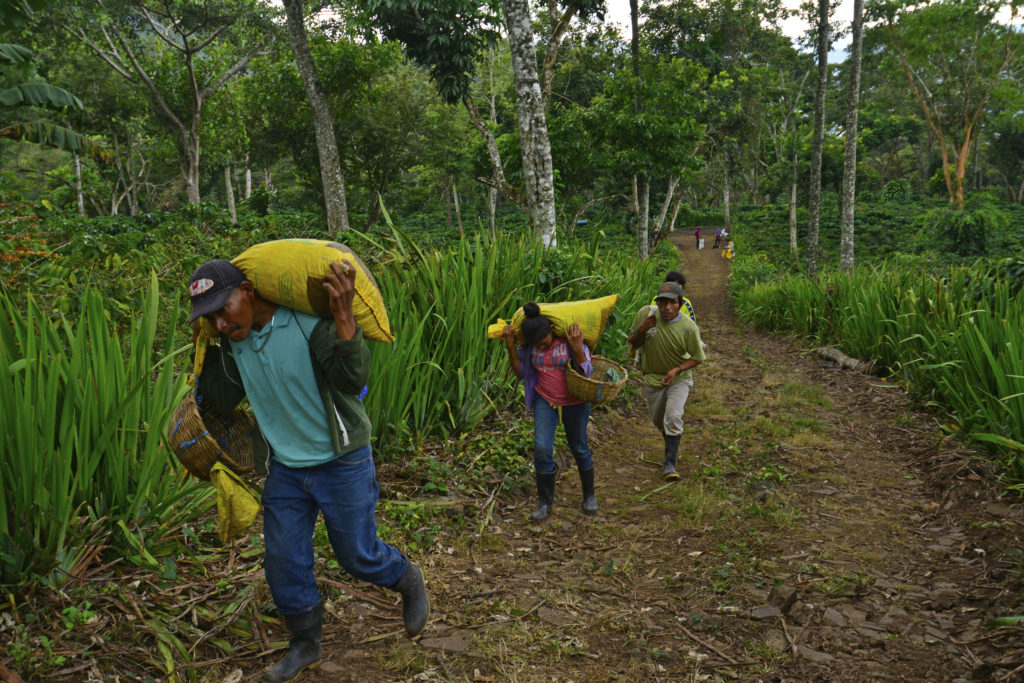
Ethical coffee sourcing begins long before beans reach a roastery or café shelf. It starts with the people and places doing the hardest work: the farmers, pickers, mill workers, and local communities in coffee-growing regions.
At origin, sustainability rarely looks like a glossy campaign. It often looks like incremental, practical changes:
These efforts take time and resilience. They require access to capital, technical knowledge, and—most importantly—pricing that reflects the real cost of producing quality coffee.
Supporting sustainable coffee means recognizing that:
When done well, sustainability doesn’t just protect the future of coffee. It often improves the cup you drink today—by enabling producers to focus on quality rather than survival.
There is growing fatigue around sustainability language in the coffee industry, and it’s not hard to understand why.
When every brand claims to be the “most ethical,” “most transparent,” or “fully sustainable,” those words start to lose meaning. Shoppers are left with bold claims and very few specifics.
Consumers don’t need louder claims. They need clearer ones.
A more responsible approach to sustainability in coffee includes:
Sustainability should feel grounded and confident, not performative or defensive. It should show up in the details:
When brands stop trying to “win” the sustainability conversation and instead focus on doing the work, the result is less noise—and more meaningful progress.
Choosing sustainable specialty coffee isn’t about finding a perfect brand with flawless credentials and zero impact. It’s about choosing to support companies that take responsibility seriously and act on it.
When you choose intentionally sourced coffee, you’re choosing to support:
This doesn’t require you to become an expert in agronomy or trade policy. It starts with a few simple habits:
Every cup becomes more meaningful when you understand the real story behind it—not a perfect narrative, but a thoughtful one rooted in care and accountability.
For us, sustainable coffee isn’t about claiming moral authority or positioning ourselves as “the best.” It’s about doing the work—consistently, intentionally, and with respect for everyone involved.
That work touches every part of what we do:
From how we source to how we roast, every decision is guided by one principle: be intentional.
Intentional sourcing means asking harder questions, accepting trade‑offs where necessary, and being willing to say, “We’re working on this,” instead of pretending we’ve already arrived.
That’s the standard we hold ourselves to as a specialty coffee brand committed to ethical sourcing, transparency, and long-term partnerships across the supply chain.
If this perspective on sustainable coffee resonates with you, there are a few ways to take the next step:
Sustainable coffee isn’t perfect—and it doesn’t have to be. What matters most is the intention behind each decision, and the willingness to keep moving toward something more honest, more transparent, and more supportive of everyone along the coffee chain.
Every cup you choose has a story. We’re here to make sure that story is told with care.